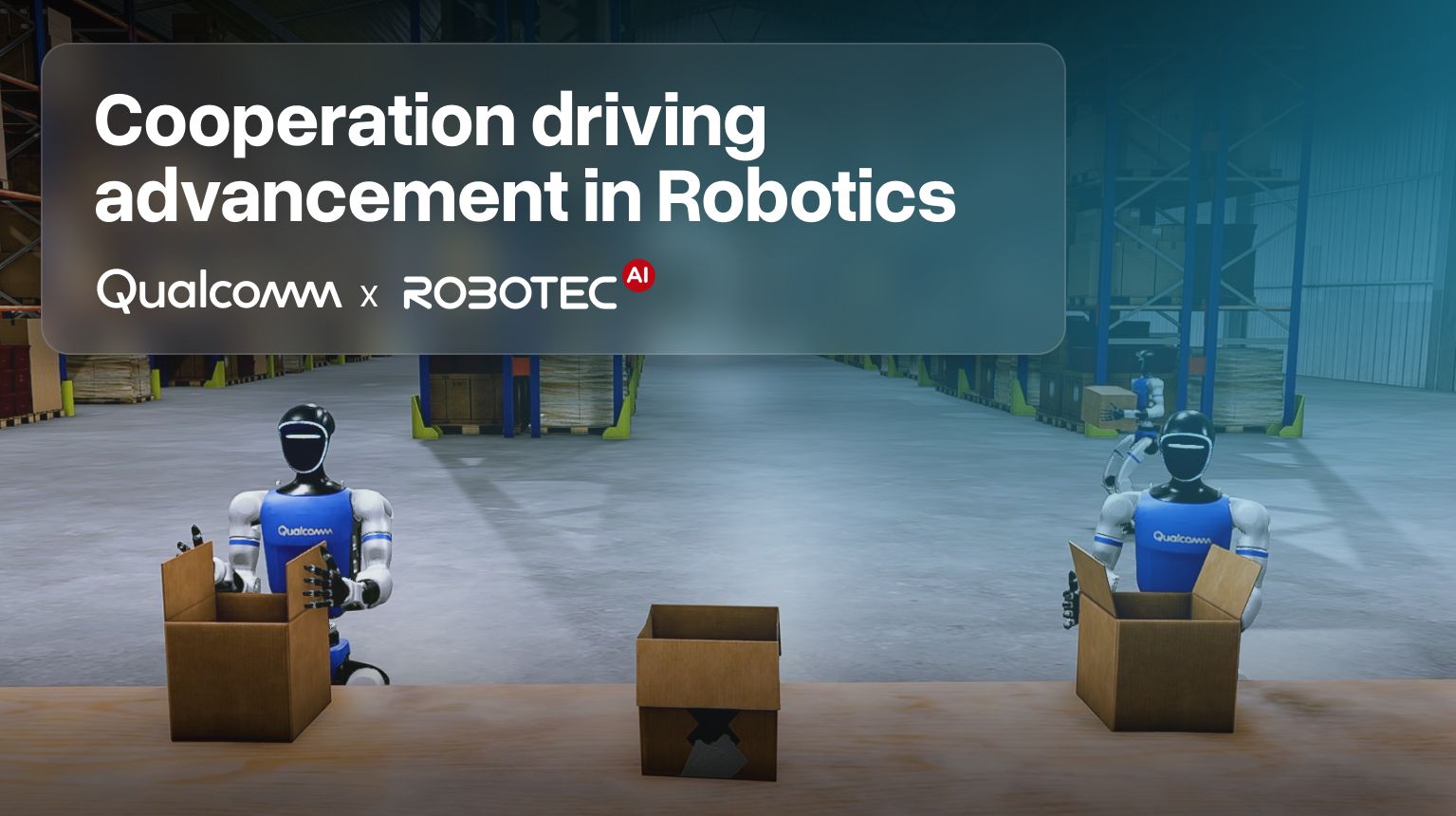
Robotec.ai - a deep-tech company specializing in scalable, physics-based simulation for testing and deploying advanced robotics - is joining forces with Qualcomm, a technology leader focused on bringing a scalable Physical AI platform through a portfolio spanning AI, high-performance, low-power computing, robotics SDK and connectivity. Together, they’re aim to accelerate robotics innovation by making simulation a true R&D and engineering force multiplier: generating high-quality data in virtual environments, validating autonomy and performance in a pre-deployment phase, and de-risking real-world deployments of next-generation robotic systems.
Real-Stack Digital Testing Across Robotic Platforms
Physics-based simulation is where robotics ideas can prove themselves fast - before costy real-world testing and data collection campaigns. It enables running a complete robot software stack (control, navigation, perception, planning) end-to-end in a high-fidelity digital world, so the full system can be stressed, not just isolated components. By combining Robotec.ai’s scalable simulation with Qualcomm’s Physical AI platforms, the full validation of Qualcomm-powered solutions becomes a reality - across many robot types, using realistic simulated sensor data (camera, lidar, radar, IMU, GNSS) in controlled, repeatable conditions. This unlocks tests that are difficult in the physical world: rare edge cases, safety-critical scenarios, and long-duration runs that would be too costly, risky, or slow to reproduce on real robots in targeted environments. As robotics moves toward more flexible systems and Physical AI, Robotec.ai and Qualcomm are cooperating to apply this approach to humanoid platforms. The potential is huge, but the complexity is even bigger - simulation offers the most practical way to explore capabilities at scale and iterate confidently before real-world deployment, particularly in the still-emerging landscape of Physical AI solutions
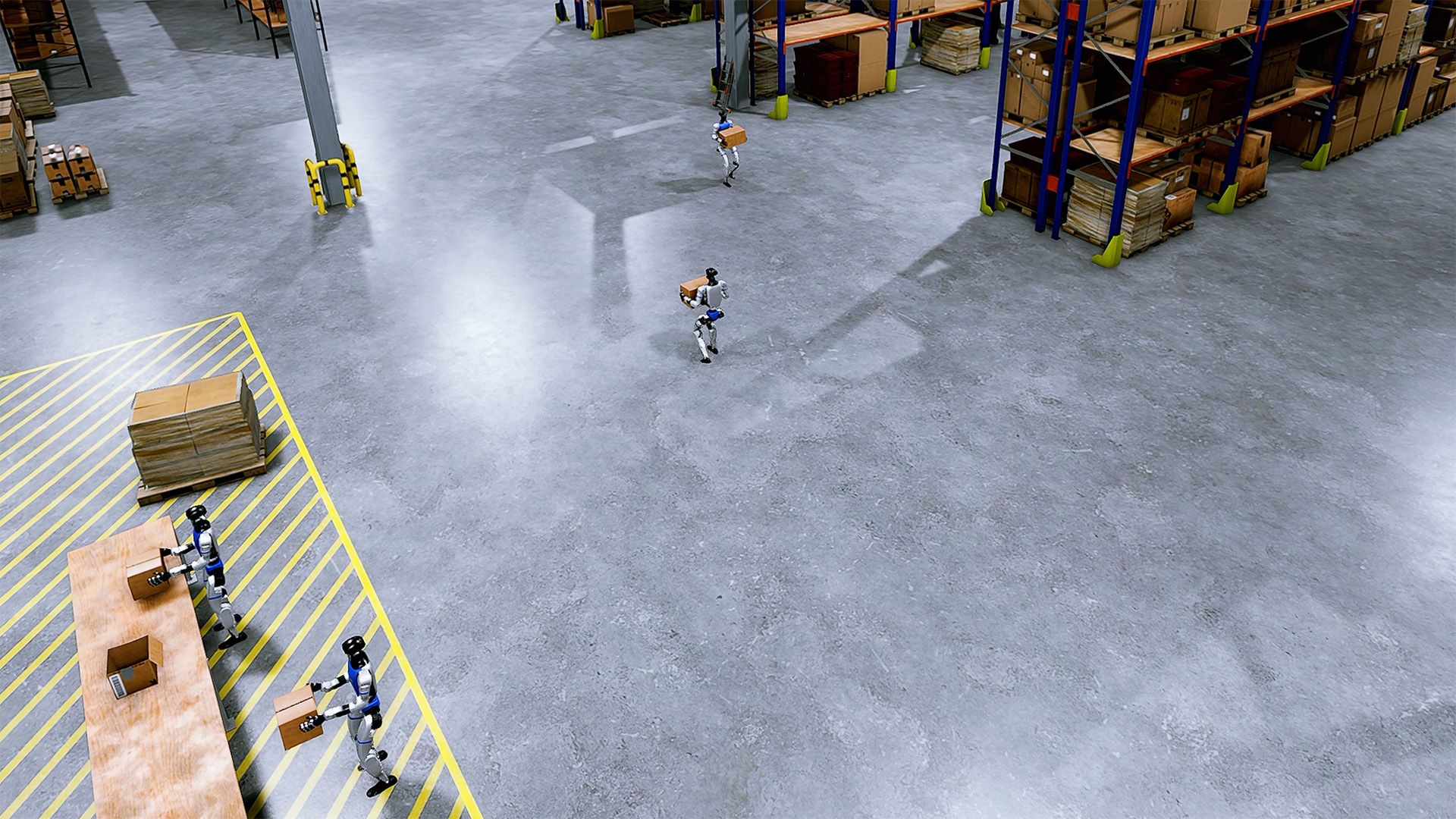
The future of Physical AI is simulated
Qualcomm has just unveiled their new Dragonwing IQ10 series, the newest upgrade to a general-purpose robotics architecture line-up, designed to support advanced industrial autonomous mobile robots and next-generation humanoids. It integrates hardware, software, and compound AI to power next-gen general-purpose robotics solutions that can reason on their own, adapt to their environment, and continuously learn to tackle challenges in dynamic industrial settings. Qualcomm’s robotics capabilities have the potential to accelerate automation in logistics, manufacturing, and retail, by boosting robot adaptability in environments, where change is constant, and items can be easily misplaced. Their Physical AI platform supports advanced perception and motion planning laying foundations for high-performance robots that intelligently adjust their tasks based on physical reality (e.g.: different locations of boxes than expected). It opens brand new possibilities for advanced autonomy across multiple industrial applications, but not without extensive testing to ensure high performance and safety. Robotec.ai’s simulation tooling replaces most of the real-world testing to accelerate R&D cycles and prototype new robotics solutions faster. Robotec.ai’s teams can run hardware-in-the-loop simulations that connect Qualcomm’s IQ10 chipsets to a simulation platform. Data from virtual sensors is processed as if they were operating in the real world, which enables testing AI models performance in a scalable and cost-efficient way.
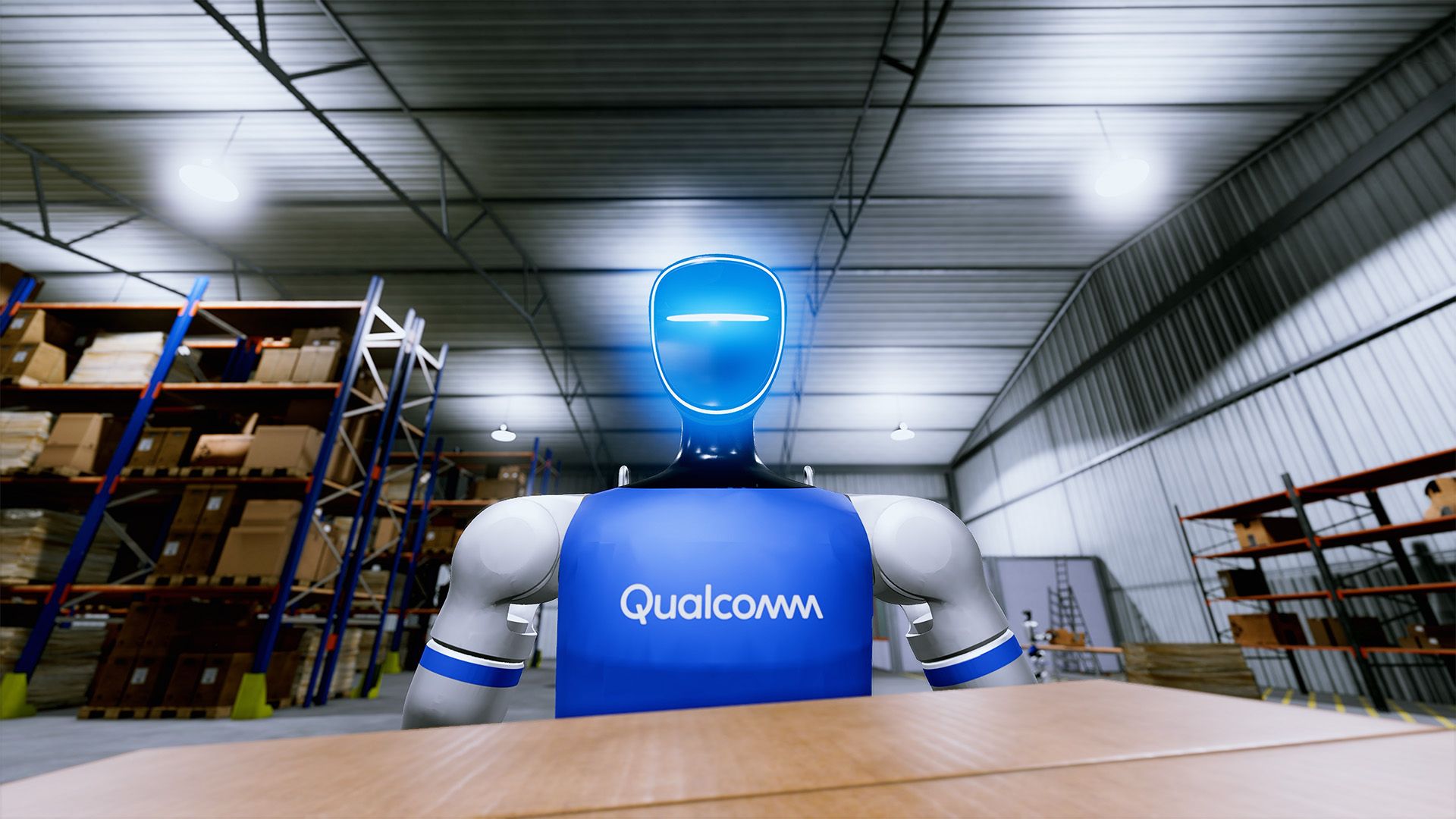
Where It Begins: CES 2026, Las Vegas
Robotec.ai and Qualcomm’s first steps together will be visible at CES 2026, one of the world’s best-known technology events. At the Qualcomm booth, visitors will get a glimpse of what this cooperation can lead to through a short video clip showing humanoid robots making their way into an industrial warehousing environment.
Interested in our latest projects? Follow us on LinkedIn to always stay updated!
You can also visit our GitHub page to learn more about our open-source projects.