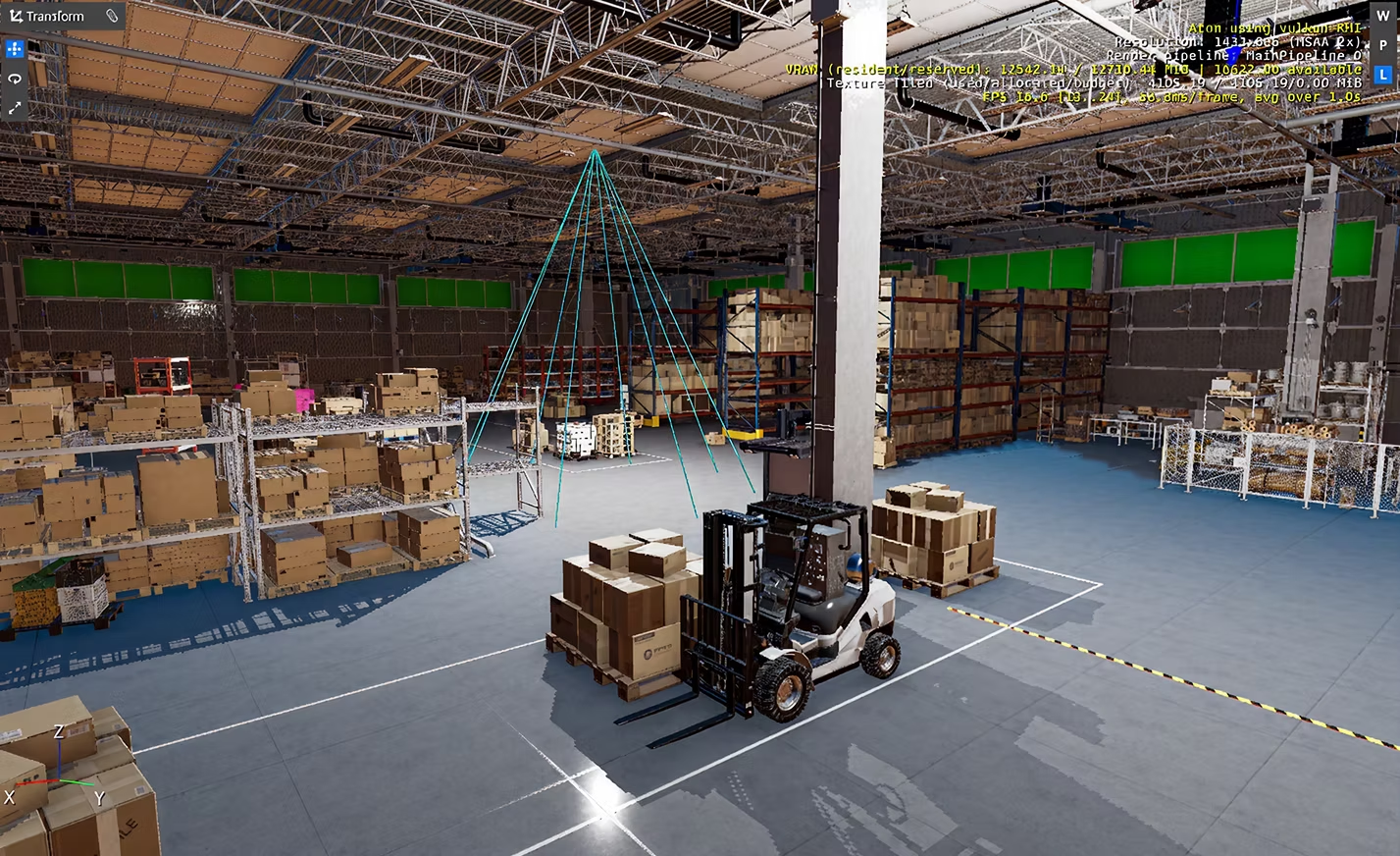
 Screenshot shows the asset in Open 3D Engine.
Across multiple domains of robotics, with applications such as manufacturing, warehouse logistics, mining, and agriculture, there are shared challenges in robotic perception, navigation, and deliberation. The recent robotics boom highlights the growing market need for open robotics standards and formats, including ones for simulation, which is a crucial tool for the development of robots.
Robotec.ai specializes in simulation and AI tools for testing and deployment of robots at scale, with a strong focus on open source. As active members of the global robotics community, we are keen to integrate, drive, and adopt key standards, bringing the best out of the ecosystem to our customers. We recently adopted Universal Scene Description (OpenUSD), which is a framework for creating, simulating, and collaborating in 3D worlds, and authored a new standard for interfacing with simulators.
Why standardize?
There are many robotics simulators, ranging from domain‑specialized to general‑purpose, and from event‑driven to physics‑based. Simulation workflows often involve testing automation and integrations with other development tools. Increasingly, as robotics matures, more than one simulator is needed for success, such as when one is well‑suited for robot learning and the other for testing at scale through numerous scenarios, often with multiple robots and large virtual worlds.
Common formats for 3D models used to build virtual worlds lack information on physical properties and behaviors crucial for simulation and must be adapted in a time‑consuming process. A fragmented ecosystem with a plethora of formats and incompatible interfaces is a roadblock for robotics. In such an ecosystem, instead of focusing on real challenges, companies spend resources on wrappers, converters, and integration issues.
Open standards are a way for us to collectively focus our efforts on solving interesting problems instead.
Adopting OpenUSD
OpenUSD is a key standard for virtual 3D assets, well‑suited for collaborative workflows, and supports complex simulation characteristics through multiple data layers. Its adoption is led by the Alliance for OpenUSD (AOUSD), it is actively developed further towards robotics simulation, and foundational to NVIDIA’s Omniverse platform.
Robotec.ai recognizes the importance of the standard. We seek to empower our customers who use NVIDIA Omniverse workflows and libraries with our simulation and AI tools, and OpenUSD is crucial for streamlined integration. Recently, we implemented support for several of its core features for virtual environments in our simulation built on Open 3D Engine and will continue to improve coverage of and adherence to OpenUSD.
Automating simulation workflows
Robot Operating System (ROS) is a key open‑source framework, a standard for robotics, bringing together general‑purpose algorithms, device drivers, control systems and a communication layer. Under governance of Open Source Robotics Alliance (OSRA), ROS advances and powers a significant part of all robots in the world, and is supported by most simulators, including NVIDIA Isaac Sim, Open 3D Engine, and Gazebo.
Robotec.ai has a long track record of contributing to ROS. We recently led a collaborative effort to develop a new ROS standard for automation and scenario‑based testing. The new standard streamlines ROS development across simulators thanks to features such as spawning robots and querying the virtual world for ground truth data. It is officially released and implemented in NVIDIA Isaac Sim (5.0 and later) and Open 3D Engine (2505 and later), with Gazebo adoption planned for October 2025. The new ROS simulation standard will be the subject of a joint talk by Robotec.ai and NVIDIA at ROSCon 2025 in Singapore, an annual ROS conference that attracts robotics innovators from all over the world.
Building the future together
Open standards for robotics simulation are our collective efforts to build a better future, and you might be in a position to adopt or contribute. The first step, accessible to all of us, is to expand our knowledge. Here are some good places to start learning about OpenUSD and simulation standards:
Interested in our latest projects? Follow us on LinkedIn to always stay updated!
You can also visit our GitHub page to learn more about our open‑source projects.
Authors:
Adam Dąbrowski, CTO at Robotec.ai