Introducing a new standard for open-source robotics simulation
Robot Operating System (ROS) is a key open-source framework, a standard for robotics, bringing together general-purpose algorithms, device drivers, control systems and a communication layer. Under governance of Open Source Robotics Alliance (OSRA), ROS advances and powers a significant part of all robots in the world, and is well supported by most simulators, including NVIDIA Isaac Sim, Open 3D Engine, and Gazebo.
There are many robotics simulators supporting ROS. Adam Dąbrowski talked about them back in 2023, when introducing Open 3D Engine at ROSCon. Two recent sources to learn about simulators are the ROSCon 2025 talk by Ángel Soriano, Evaluation of ROS 2 Simulators 2025, and a ranked list of simulators by Kimberly McGuire.
Increasingly, as robotics matures, more than one simulator is needed for success, such as when one is well-suited for robot learning and the other for testing at scale through numerous scenarios, often with multiple robots and large virtual worlds. Until recently, ROS had no standard to regulate interacting with simulation. Standardized interfaces are necessary to allow developers to cost-efficiently build automated test pipelines that interact with any compatible simulator, catching issues early, and enabling robust test-driven robotics development.
Responding to this need, Robotec.ai led a collaborative effort with Gazebo, Open 3D Engine, and NVIDIA to develop a new ROS standard for simulation. The new standard streamlines ROS development across simulators and lowers costs for migrating workflows and co-simulation. It is an effective standard, meaning it is already implemented in Gazebo Jetty, NVIDIA Isaac Sim 5.0, and O3DE 2505, and has a demonstrable interoperability value. This new advancement was possible thanks to an amazing open-source collaboration between technical leaders of these ROS simulators, and other ROS ecosystem veterans.
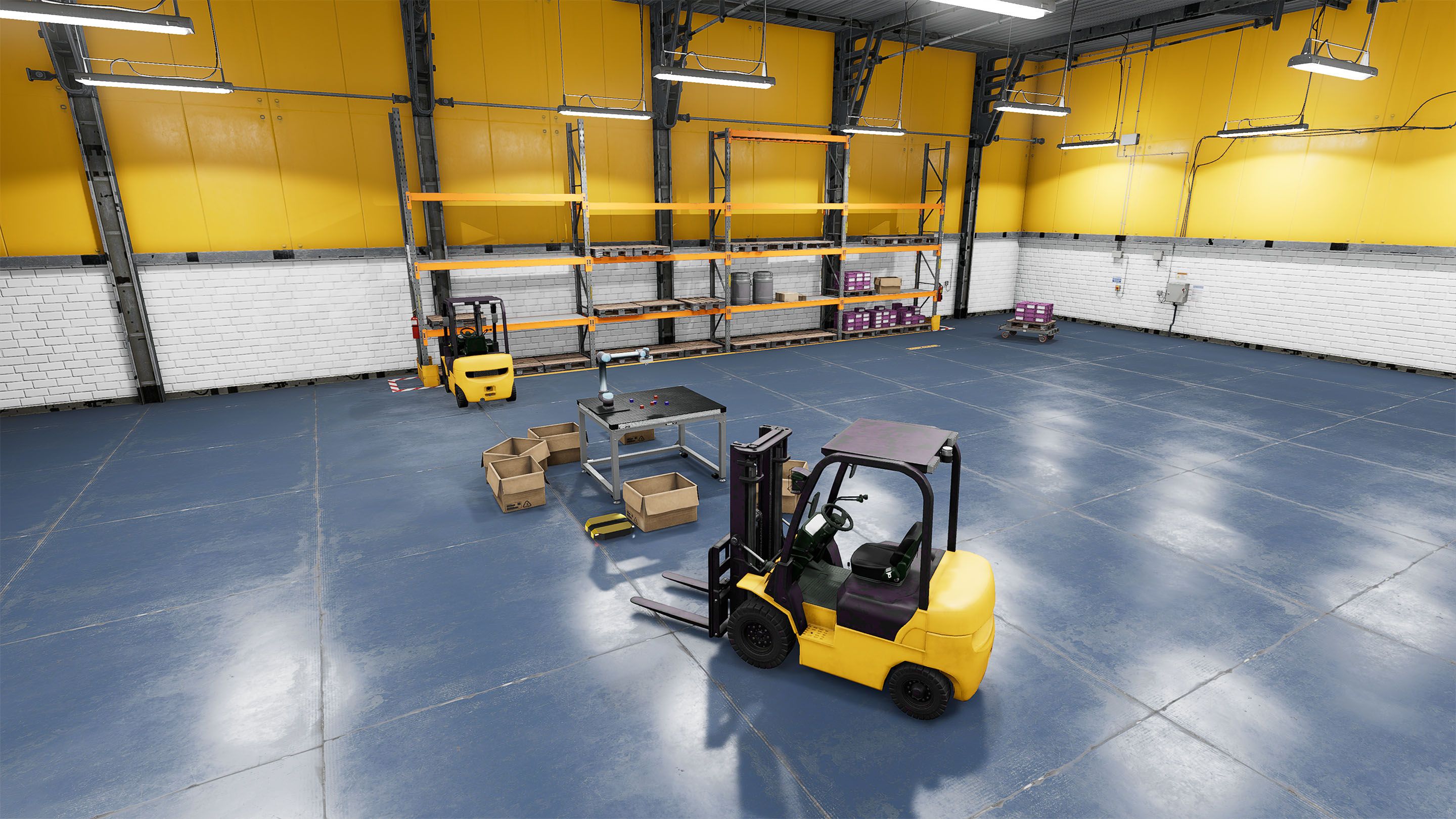
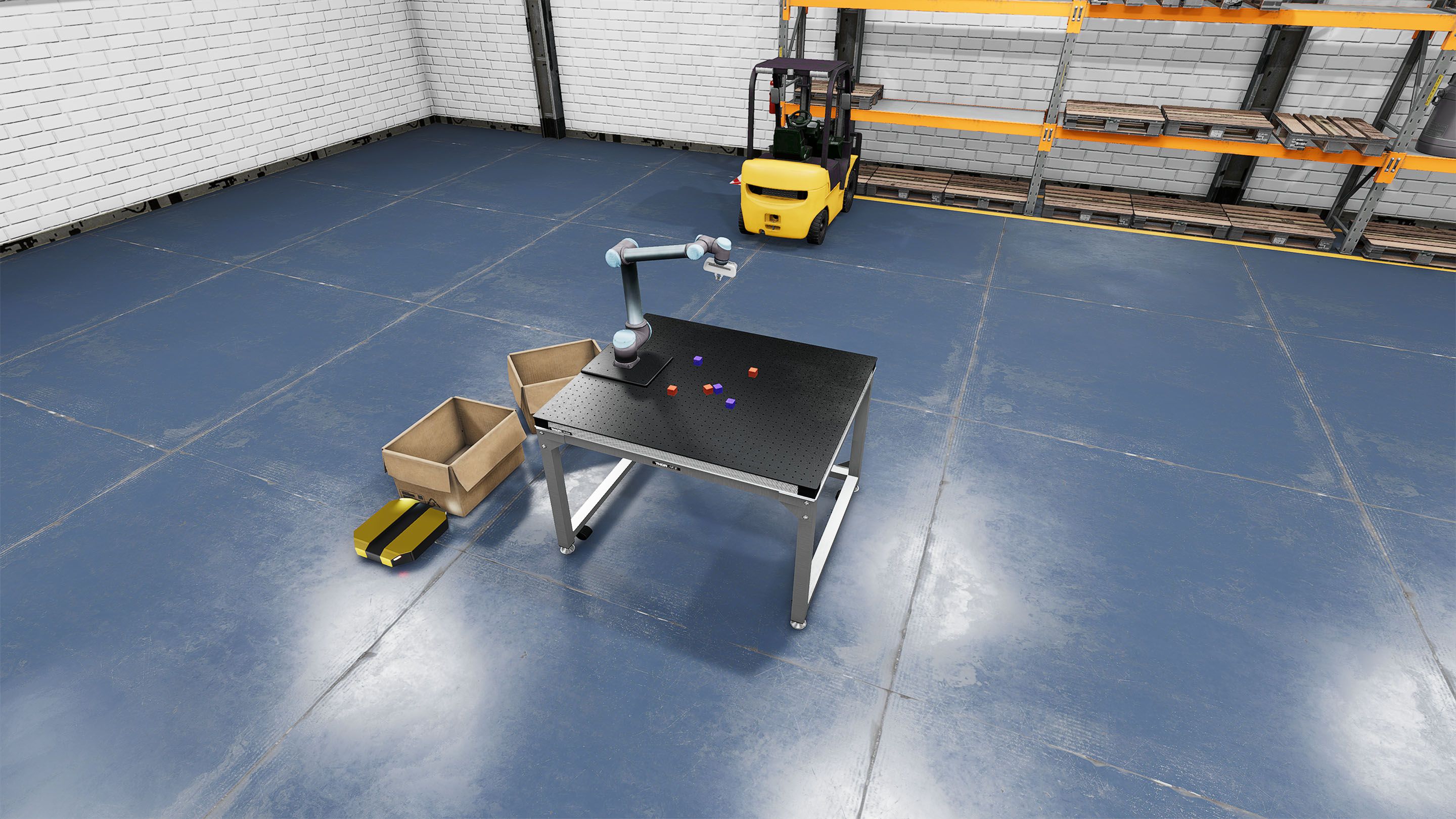
By defining common message, service, and action types, simulation interfaces enable different simulators, and tools built for them, to work together with much less effort. Its implementations in the most popular open-source simulators bring significant value. Previously, simulation engineers had to build custom means of controlling the simulation for common tasks such as spawning of new robots and objects, moving entities around for testing, controlling the simulation flow with resets and step execution, and getting ground truths for triggers in test scenarios. Now, these features are available out of the box. ROSCon 2025 also marks the release of highly useful open-source simulation resources for the community. These include a handy RViz2 plugin supporting the new standard, tutorials, and new simulation worlds. What is particularly interesting is that for the first time we have a simulation scene, a warehouse originating in NVIDIA Isaac Sim, which is now supported in each of the three simulators. It allows the community to test the interoperability of the new standard. A new write-up on how to run each of these simulators in the cloud is also out, thanks to Michael Hart.
To learn more, see our incoming ROSCon 2025 talk Introducing the New ROS Simulation Standard at 17:00 - 17:20 SST (Singapore time) by Adam Dąbrowski (Robotec.ai, O3DE), Ayush Ghosh (NVIDIA, Isaac Sim), and Ian Chen (Intrinsic, Gazebo).
Interested in our latest projects? Follow us on LinkedIn to always stay updated!
You can also visit our GitHub page to learn more about our open-source projects.
READ MORE: https://blogs.nvidia.com/blog/roscon-2025-open-framework-robotics
Authors:
- Adam Dąbrowski, CTO at Robotec.ai