
Challenge
Underground mines require a safe way to manage mixed traffic: combining personnel, manned machines and autonomous vehicles, while maintaining strict safety standards underground.
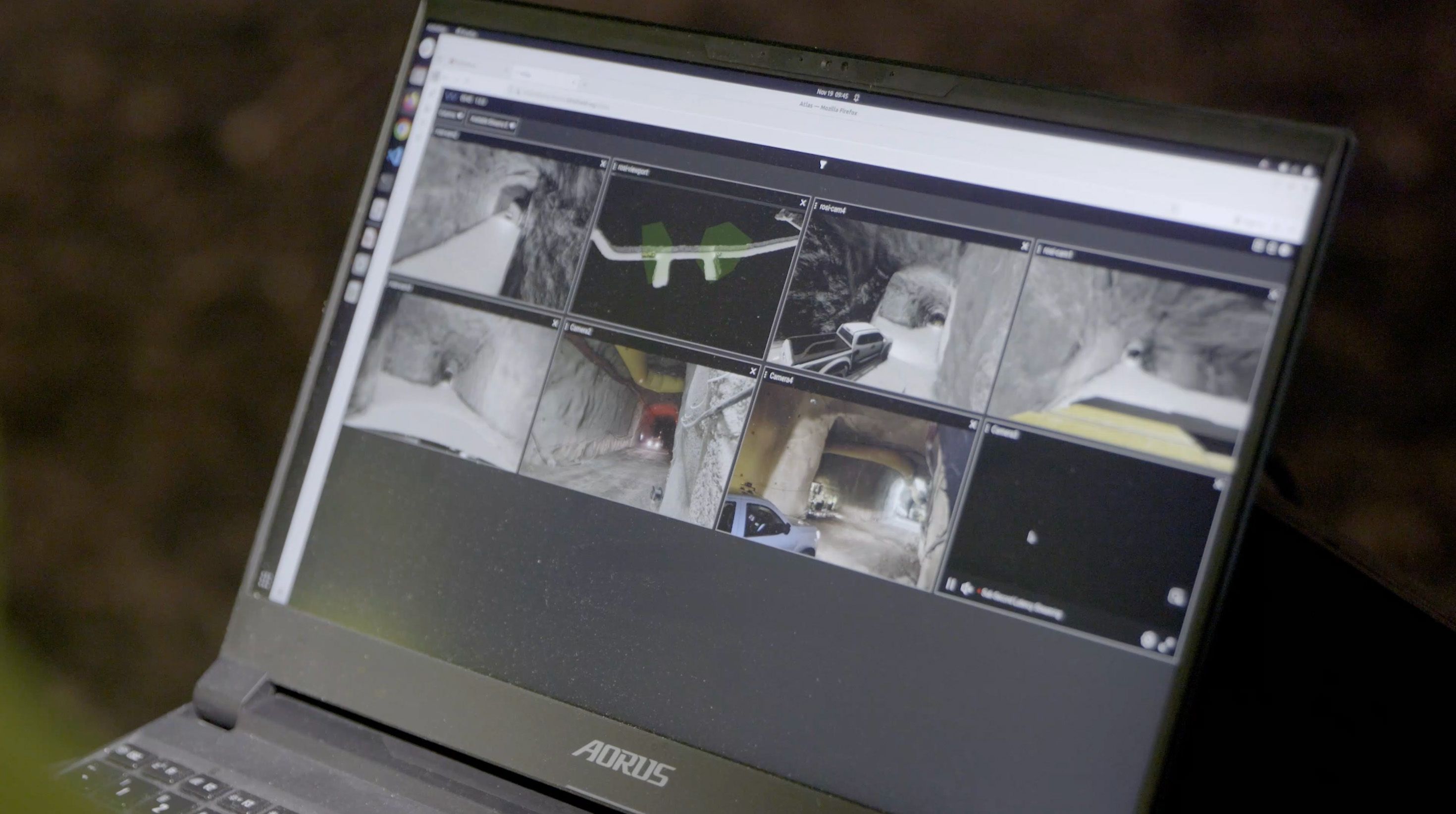
Key safety and operational challenges:
- Single-lane, high-traffic tunnel – heavy trucks, utility vehicles, and personnel must share the same narrow access, creating “mining thrombosis”
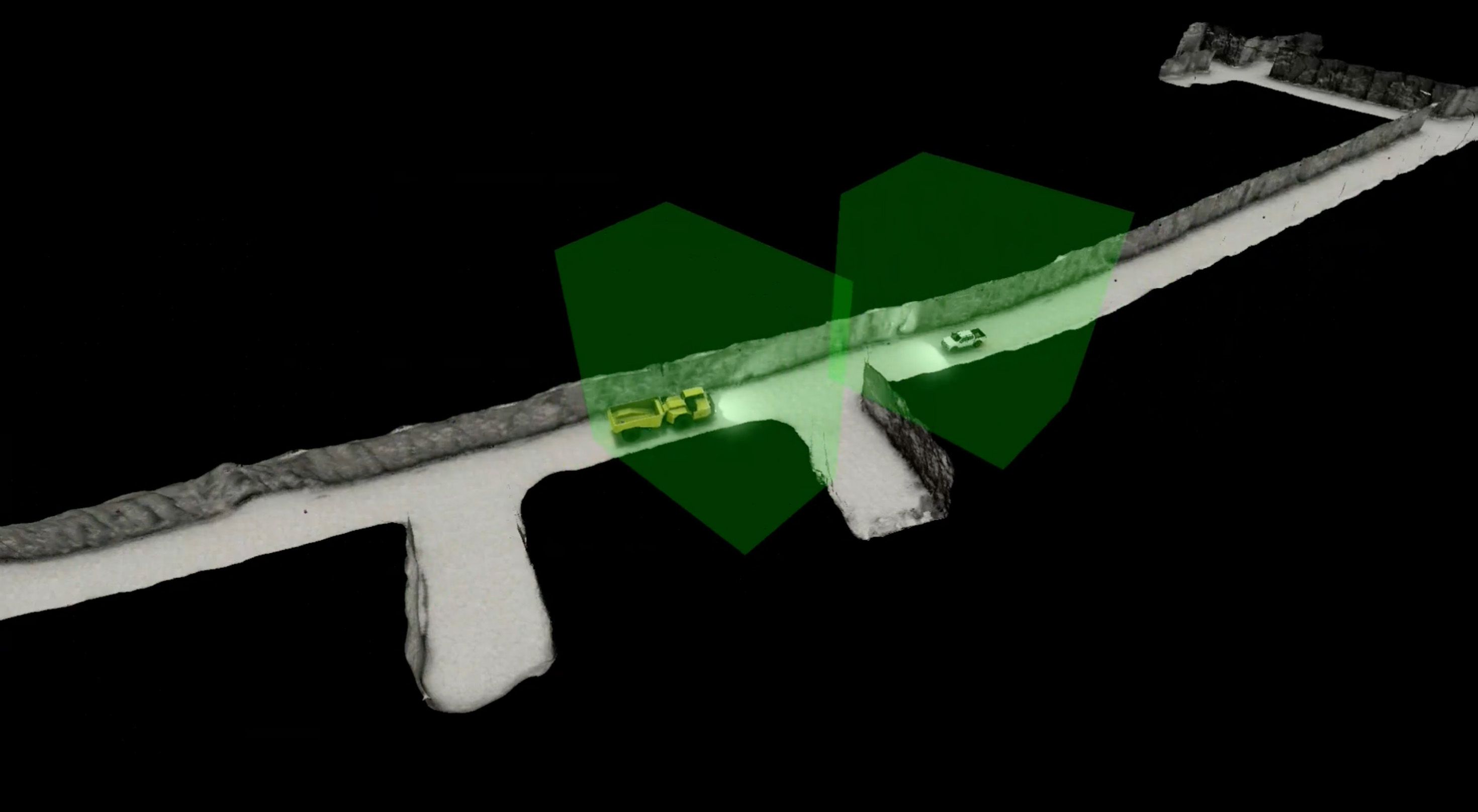
- Dynamic safety requirements driven by productivity – static robot cells keep vehicles far apart, reducing tunnel capacity. To increase the flow, machines need dynamic geofences that shrink and expand based on relative positions.
- Complex sensing setup – UWB wall-mounted sensors and vehicle tags generate continuous ranging measurements data that must be turned into approximate positions and safety zones in real time
Why simulation was essential:
- No complete physical infrastructure yet – the safety concept required early validation before the new tunnel and hardware were fully deployed
- High risk of real-world testing – validating emergency stops, bubble overlaps, and dense traffic scenarios only in the mine would be slow, costly, and unsafe
Solution
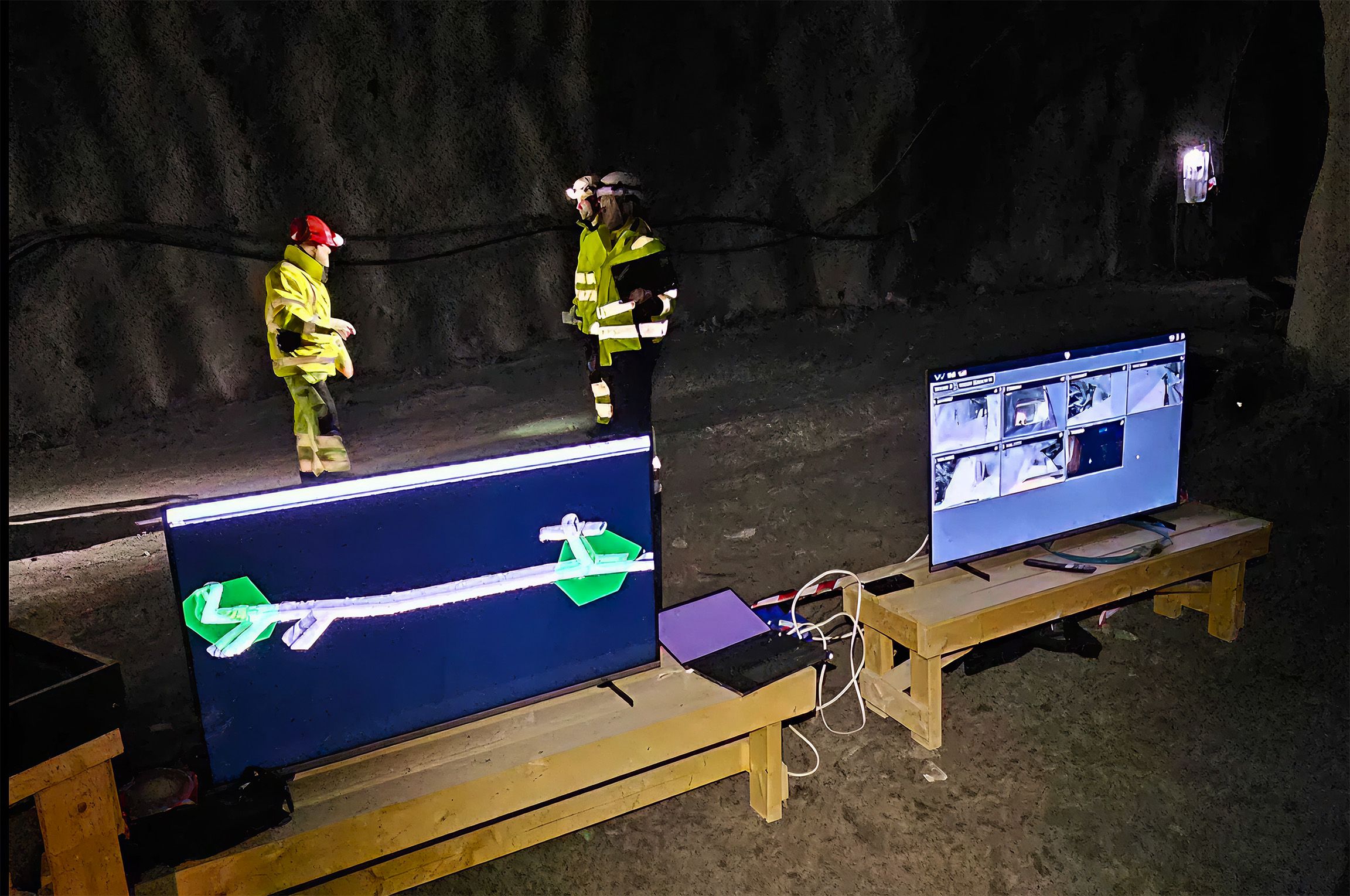
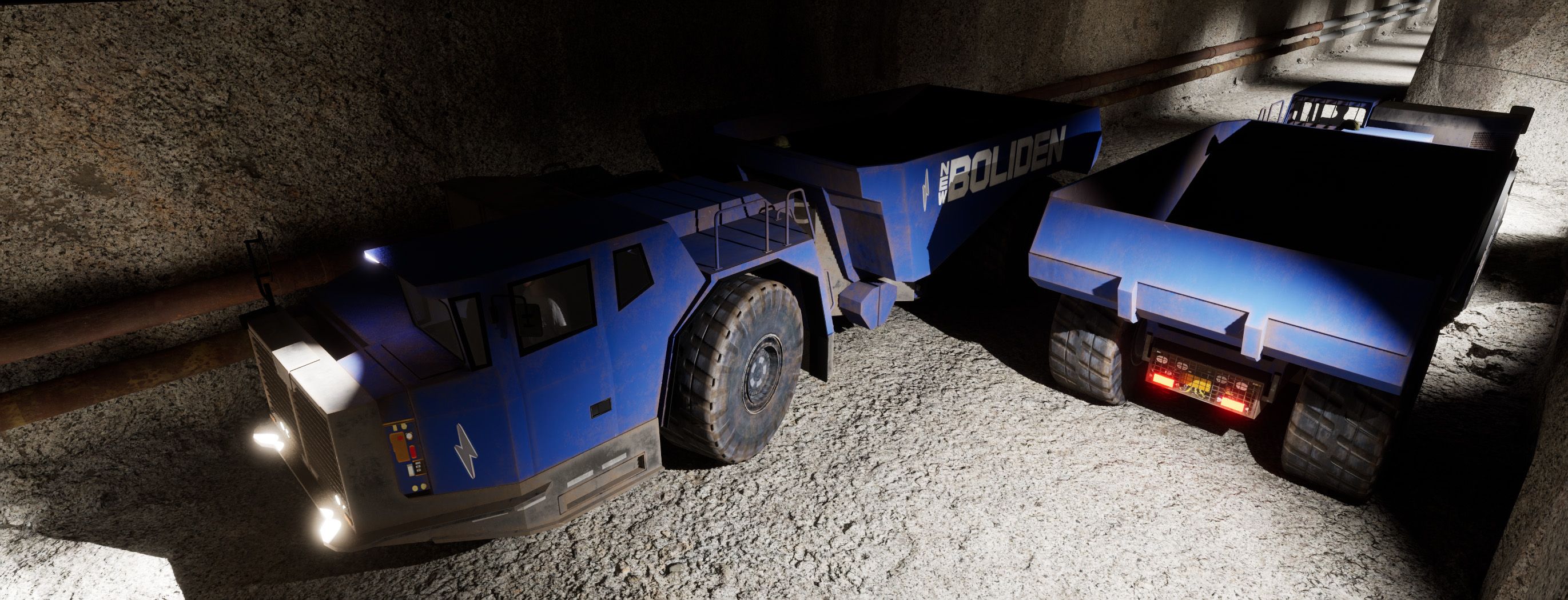
Robotec.ai deployed its RoSi digital twin platform to create a high-fidelity virtual model of Boliden’s underground tunnel and vehicle fleet. This environment became the foundation for developing, testing, and validating the Kite Shield safety system across three stages.
- Digital twin of the tunnel and fleet
- A precise 3D environment replicating the tunnel geometry and infrastructure layout provided an accurate foundation for early testing
- Sensor simulation – simulated UWB distance measurements enabled safe, repeatable and fully controlled evaluation of the safety system from day one
- Vehicle dynamics and behaviour were then simulated to support full system validation
- Phase I – Virtual-world development of the safety system
- Built a 3D digital twin of the mine tunnel and vehicles
- Simulated UWB anchors, tags and distance measurements
- Provided a virtual development and testing environment for the Kiteshield safety system, using the twin as a live data source
- Computed and visualized bubbles and potential collisions in real time
- Tested multiple scenarios where virtual vehicles, sensors, and bubbles interacted under different traffic patterns
- Allowed to test and tune different safety parameters and behaviours without using physical hardware
- Phase II – Integrating Safety Logic with the Real Mine
- Connected the safety system to the real mine while mirroring its behaviour in the simulation
- Provided a clear view of how the safety logic responds to real tunnel conditions, traffic flow and infrastructure layout
- Phase III – Mixed-reality validation
- Injection of virtual vehicles into the deployed system forced real units to interact with them as if they were physically present
- Enabled safe stress tests, close-pass scenarios, and evaluation of new features
Results
- Validated dynamic safety system before tunnel construction: all safety logic and dynamic geofence behaviors tested early in simulation.
- Clear visualization of vehicles and geofence: the digital twin provides a real-time view of vehicle positions, safety bubbles and possible conflict points, helping better understand how the safety system works.
- Mixed-reality testing: real and virtual fleets coexist, enabling large-scale stress tests even when physical hardware is limited.
- Reduced cost and deployment time: early validation replaced long on-site trials and minimized hardware risks.
- Improved safety and traffic throughput: Boliden can safely evaluate dense traffic, close passes, and emergency stops using virtual and mixed-reality scenarios.
- Foundation for future automated tunnels: the UWB sensing, digital twin and mixed-reality setup creates a solid base for scaling automation and increasing the capacity of Boliden’s underground operations.